Responsible travel
Travel here the way people live here
Wildlife, watched properly
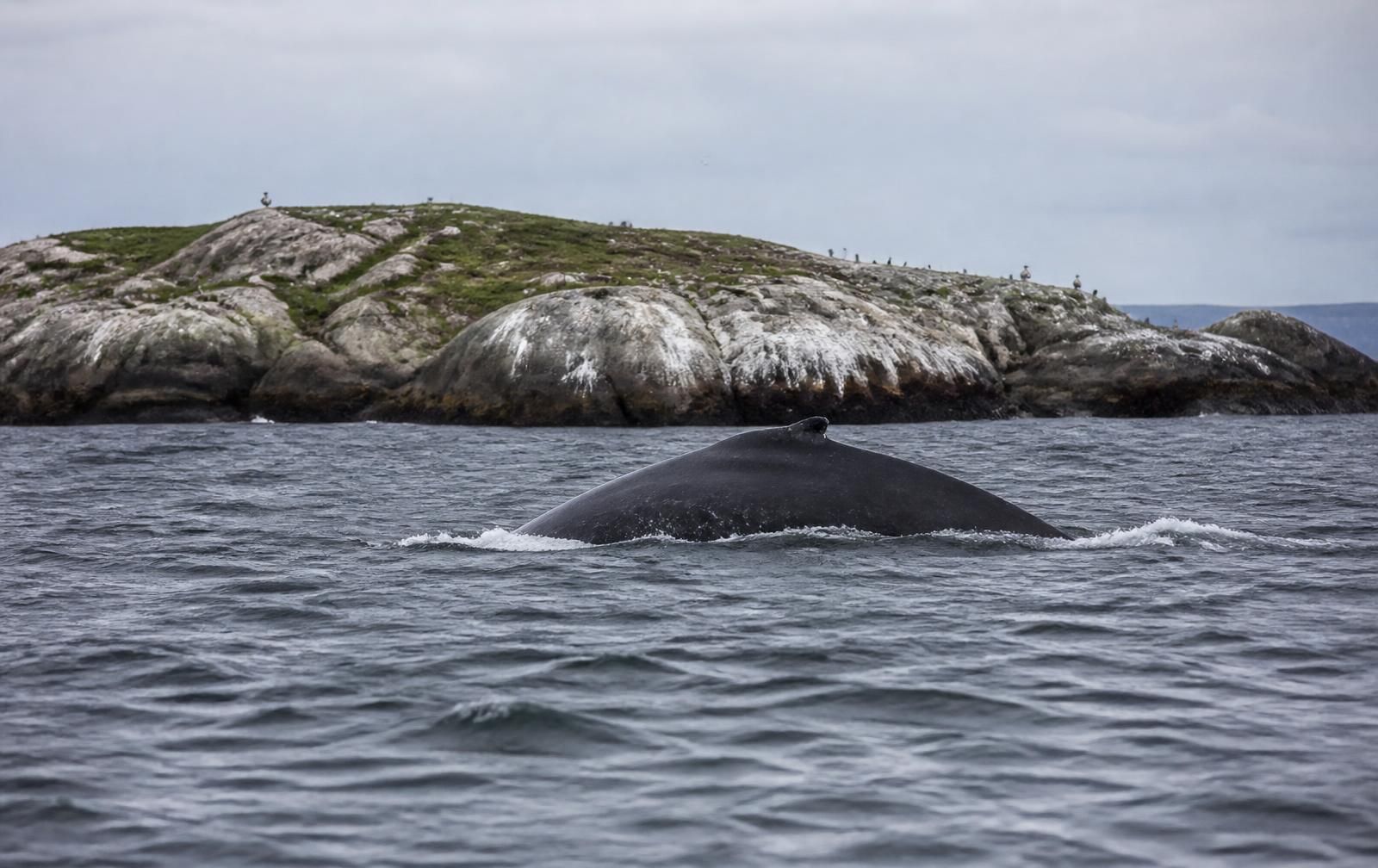
Whale-watching operators work under federal marine mammal regulations that set minimum approach distances. A good skipper cuts the engine and waits. If a boat is chasing, circling, or pushing in on a feeding humpback, that is not a better tour, it is a worse one. On land, keep well back from seabird colonies at Witless Bay and Cape St. Mary’s and stay on marked paths so nesting burrows stay intact.
Ice is not a photo prop
Icebergs roll, split, and calve without warning, and the wave from a collapse can swamp a small boat or sweep a shoreline. Do not paddle out to one, do not climb ice pans, and keep back from wet cliff edges where the rock gives no grip.
Coastal and trail safety
- Most Newfoundland cliff edges are unfenced. Wind gusts arrive with no warning.
- Tell someone your route on remote hikes; coverage disappears fast.
- Carry more water and warm layers than a mild forecast suggests.
- Follow closures, including the seasonal Gros Morne Mountain closure for calving caribou.
Communities are not sets
The house you are photographing belongs to someone, and the wharf you are standing on is a workplace. Ask before taking portraits, keep vehicles out of turning space, buy from the local shop rather than stocking up in the city, and accept that a two-minute conversation may become a twenty-minute one. That is the point of coming.
Indigenous Newfoundland
Mi’kmaq people have a long and continuing presence on the island, with communities including Miawpukek First Nation at Conne River and members of the Qalipu First Nation across many communities. The Beothuk, who lived here at the time of European contact, were devastated by displacement, disease, and violence, and Shanawdithit, the last known Beothuk, died in St. John’s in 1829. Sites like the Beothuk Interpretation Centre at Boyd’s Cove present that history carefully. Learn it from Indigenous-led sources and organisations where you can, and treat burial grounds and archaeological sites as the places they are.
Parks, permits, and Leave No Trace
Gros Morne and Terra Nova are Parks Canada sites with entry fees and posted rules. Provincial parks and ecological reserves have their own. Pack out everything, use established fire areas only, respect fire bans in dry spells, and keep drones away from wildlife, colonies, and other visitors.